Check out my new page about getting 66 miles per gallon with the ex-GEET Metro here
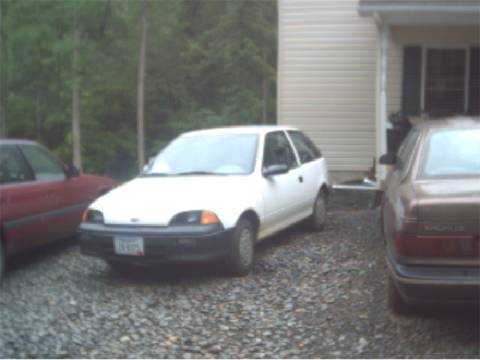
Jeremiah's ex-GEET project carIf you want to save money and the environment, don't fall for GEET.Ever seen a Geo Metro tow a car? Click here
Check this out! I just put a 3tech head on the car with an economy grind cam and 11:1 compression ratio, with the Somender Singh grooves. The torque increase is amazing! Click here Update;I just installed a racing header from Suzuki Racing Development in the car. There's a definite increase in horsepower and a possible increase in fuel economy. The next step is to install a transmission from the 1993 Suzuki Swift base model. The Swift tranny has a 3.52 to 1 final drive ratio which means that my engine RPM will be about 90% as fast as it currently is at any given highway speed.
The car has over 300,000 miles on it now, with the original tranny and 3rd engine. The late summer of 2005 the car has been averaging about 55 MPG back and forth to work, and more on longer trips.
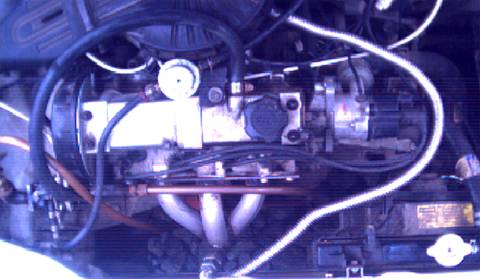
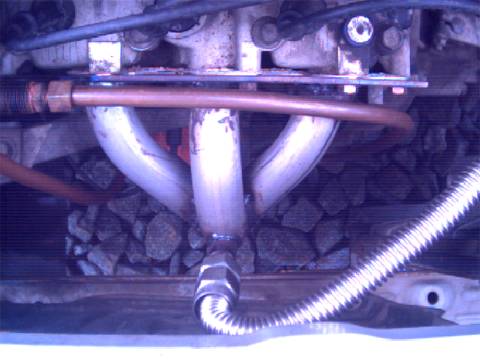
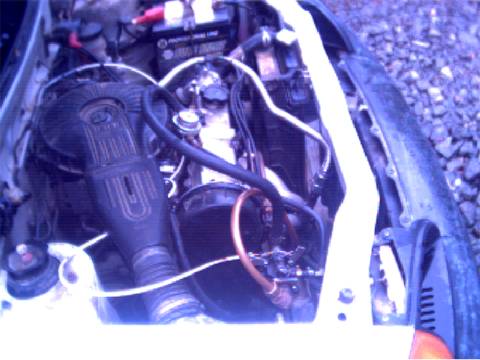
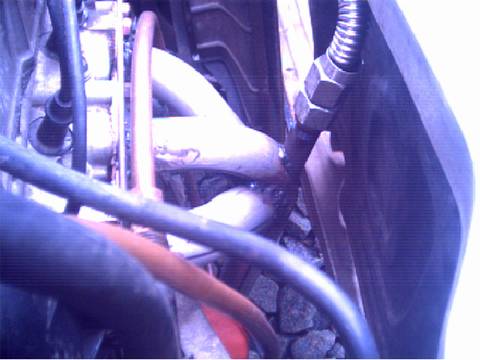
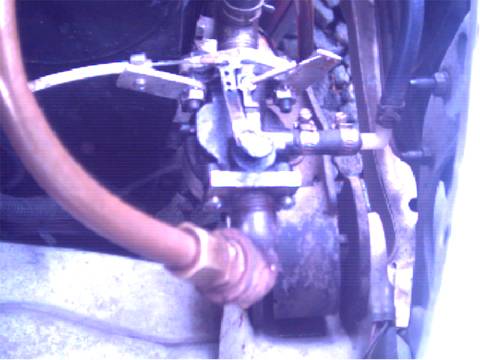
Free GEET small engine plans, http://www.friend.ly.net/GEET/plans.htm.But, is GEET really for real? See Eric's page, CLICK HERE I have made the last GEET system for this car that I have planned. I may not modify it much more before possibly going back to fuel injection, because the results from my attempts to increase efficiency have not been encouraging. The car has been driven over 10,000 miles with my various GEET systems on it.Update 9-3-00 Paul Pantone never did get that Metro going. When I went there it was not driveable. I doubt we will see it roadworthy soon, and if we do it will probably not get 100 MPG. There is increasing evidence that most of the GEET claims may be false. Update 8-13-00 I have reinstalled the fuel injection on the ex-GEET Metro. THe gas mileage is 50 MPG or higher and there is around 10 extra horsepower than the stock Metro had. This is probably due to three things. I installed a simple fuel preheater, left the 2 inch free flowing exhaust system in place, and put a ram air type scoop on the front of the car to help the engine to breathe. I have driven the car nearly 1000 miles since these changes. Update 8-7-00 I have driven the car from Ontario back home to Montana, and now it has close to 15,000 GEET powered miles on it. I will be re-installing fuel injection on it, and trying some simple tricks to increase power and economy by a few percent. I should be able to get over 50 MPG out of the car this way, and still have stock horsepower or more. Paul Pantone is still planning to show me that 100 MPG is possible in a Metro using GEET. So hopefully in less than two weeks I will be able to give a report on that here. Update 7-10-00 The GEET reactor clogged up very badly after around 40 miles of driving with used engine oil in the tank, so I am not using that as fuel anymore. Also, Paul Pantone, the inventor of GEET, wants to make a Metro like mine do 100+ MPG and wants me to help and also be the test driver. I will give a report here of what happens. Should be done by mid August. Update 6-20-00 There is some very good news recently. The car runs very well using a mixture of 25% used petroleum-based engine oil with the balance gasoline. There is smoke at startup, and a little smoke once in a while when the engine is changing speeds as during shifting etc. But other than that it seems to run cleaner than it would on straight gasoline. I think it would handle 50% used oil well, though startup would be difficult. At least the used oil is free! Here are some pictures of my latest attempt.
Some particulars about the latest system... The gasoline is mixed with exhaust in a small engine carburetor (the "PC carb") that is modified to give about a 3 to 1 mix of exhaust and gasoline. The GEET "reactor" was built into a custom header, with the intent of raising the temperature of the gasoline to nearly 1000 degrees F. It is hoped that the combination of high temperature and exposure to water in the exhaust will cause the gasoline to break down into lighter hydrocarbons like propane. It is then mixed with air before entering the engine. Test results using this latest system indicate that the gas mileage ranges from about 40 MPG to 50 MPG highway. This is worse than with the car's original fuel injection system. In order to get the gas mileage above the original specs, it is necessary to put a vaporizer in the system to vaporize the fuel before it goes into the reactor. However I am interested in getting 100 MPG, and it does not look like this is possible using current known technology including GEET, without serious changes to the entire power system and drivetrain of the car. So I will probably go back to the stock fuel injection unless someone proves that GEET really works. The report below is quite old by now, lengthy, and has many assumptions and some incorrect ideas. You may read it if you want an idea of what a person goes through when trying to build a fuel system without an extensive knowledge of what is actually happening in an internal combustion engine. Also it shows how easy it is to be fooled and think that the gas mileage is better than it really is. You can email me at: jsenner@hotmail.com |


|
The old GEET system and it's problems... Update 5-30-99 This car isn't really that safe to drive yet, because it's unpredictable when it will stall, I have to keep adjusting the mixture. If I can't make it reliable, I will just have to go back to the stock fuel injection, I guess. But not before I prove whether it will get more then 100 Miles per Gallon of gasoline. Update 6-3-99 The trip to the muffler shop was about 100 miles round trip, and the car got about 60 MPG, only two cylinders were firing, so top speed was around 60-70 MPH in fourth gear. When all the cylinders are firing, the gas mileage should go up quite a bit. Update 6-4-99 Update 6-15-99 Overall, things are looking good, I think it's pretty close to being done. Update 6-16-99 Update 6-17-99 I think I have discovered that one of my theories as to what was going on was wrong, there is hardly any exhaust pressure at all. Instead, I am starving the reactor. Before I changed the float bowl vent, it would choke enough to get gas through it anyway, and I still had power. Now that it can't choke it I think there is really a different problem than I thought. So I am going to be modifying the carb linkages, and putting a large size exhaust feed in. GEET reactor vs Catalytic convertor...... Update 6-18-99 Yesterday I had checked the reactor rod, and found that it was a little long, so I had shortened it some. So today when I ran the car the exhaust smelled noticeably cleaner. I checked the rod again after I ran it, and it was still about 1/8 inch too long, so I shortened it that much. I'll see how clean the exhaust smells next time I run the car. Update 6-20-99 The exhaust is somewhat cleaner smelling, when the mixture is lean going into the reactor. I think the mixture is still too rich. Because the gas mileage seems kind of rotten, for a GEET car. After I get some exhaust pressure to the carb maybe I can really lean it out and still have the top end. Update 6-22-99 The gas mileage seems to be around 50-70 MPG. There is a definite lack of power now, which I am going to be working on fixing... I have to drive in fourth gear most of the time on the highway. But I think I can tell that there is a mixture setting on the carb that produces an exceptionally clean exhaust. I mean, like no exhaust I've ever smelled from an engine, hot and steamy and kind of sweet smelling. So I am still learning. GEET says there is a sweet spot that produces the best mileage, and mileage can be tuned from 1/2 of stock to more than 3 times stock. So if I don't get the mileage yet, blame it on the tuning... Update 6-23-99 Update 6-27-99 All the above gas mileage estimates are probably off, I think the car has generally been getting less than 40 MPG, since the retrofit. Before the retrofit it got about 48. Update 7-8-99
Update 7-15-99 Update 7-18-99 Update 7-26-99 The next thing I plan to do Update 7-28-99 A concern is, that the fuel entering the reactor may be getting so hot as to kill the reaction. It is getting hot enough to discolor the copper tubing that it goes through to get to the reactor. I will find out I guess. One thing is very likely, that is that the fuel is in a vapor state and not liquid, at this temperature. Update 8-2-99 Update 8-5-99 Update 8-8-99 Update 8-24-99 Update 10-7-99 Update 11-12-99 I noticed that it is easy to make the engine ping or knock now as I am driving. At least I think that is what I am hearing. The emissions are quite clean though. It smells like a kerosene heater when it runs. Another interesting effect is that the engine will diesel when I turn the car off. I can open the hood and pull the spark plug wires out and it will keep dieseling. It only runs good when the ignition is on but I have to adjust the mixture way rich to make it quit. Before when it was running on straight gasoline I had to have the small carb mixture just right for it to diesel very long, and it would quit in a short time on it's own. I am going to only run a little kerosene or diesel I think... I don't want to destroy this engine prematurely. Update 11-25-99 For the latest update see the top of the page. You can email me at: jsenner@hotmail.com |

 I drove it 10 miles on the highway, and
discovered that I don't have a high end... So I checked out the pressure
in the exhaust feed line, and it doesn't have any, in fact it seems there
is a little vaccuum instead, at the high speeds. So I am going to angle
the connection to the exhaust pipe so as to pressurize it a little.
I drove it 10 miles on the highway, and
discovered that I don't have a high end... So I checked out the pressure
in the exhaust feed line, and it doesn't have any, in fact it seems there
is a little vaccuum instead, at the high speeds. So I am going to angle
the connection to the exhaust pipe so as to pressurize it a little.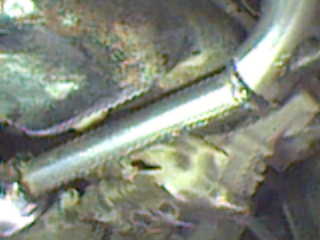 Update 7-14-99
 is put 8 feet of 3/8 size black iron
pipe inside of the 2 inch diameter exhaust pipe
is put 8 feet of 3/8 size black iron
pipe inside of the 2 inch diameter exhaust pipe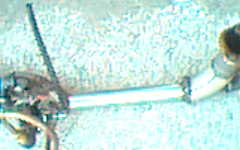 downstream of the reactor. I will run
the mixture of exhaust and gas from the carb through this, it should help
to vaporize the gas before it enters the reactor, since the exhaust
temperature there is around 400 degrees F, and it is in a vacuum.
downstream of the reactor. I will run
the mixture of exhaust and gas from the carb through this, it should help
to vaporize the gas before it enters the reactor, since the exhaust
temperature there is around 400 degrees F, and it is in a vacuum.